


Can disposable PVC small cards withstand damage or blurring caused by sweat, rain, or everyday friction?
Release Time : 2026-01-13
In large concerts, sporting events, music festivals, or membership-only venues, disposable PVC small cards with nylon wristbands have become the mainstream solution for identification and access control. Although these cards are for "disposable" use, they need to withstand high-intensity environmental tests for hours or even days—from sweltering audiences, sudden rain, frequent arm friction, and even scratches against backpacks and railings.
1. PVC Substrate: Ensuring Toughness in Thinness
Disposable PVC small cards typically use 0.3–0.5mm thick flexible PVC sheets. This material itself possesses good flexibility and tear resistance. Compared to paper or ordinary plastics, PVC is less prone to deformation, wrinkling, or softening due to water absorption. Even after prolonged contact with sweat or rain, its physical structure remains stable and will not quickly curl or disintegrate like paper cards. More importantly, high-quality PVC raw materials undergo optimized plasticizer formulation to ensure softness and comfort while preventing cracking during bending or stretching due to excessive brittleness.
2. Surface Coating and Printing Process: Key Barriers Against Wear and Fading
Blurred information often stems from ink rubbing or coating wear. To address this, high-performance disposable PVC cards typically employ double-sided matte or glossy protective films and use solvent-resistant, hydrolysis-resistant resin-based inks or heat transfer technology during the printing process. Some high-end products also undergo UV curing, creating a cross-linked structure between the ink and the surface, significantly improving wear resistance. Real-world testing shows that cards treated with this process can withstand hundreds of simulated abrasion tests, with QR codes, text, and colored patterns remaining clearly legible, effectively resisting salt from sweat, rain, and friction from clothing.
3. Environmental Adaptability: Comprehensive Considerations from High Temperature and Humidity to Chemical Contact
Large events often involve high temperatures, high humidity, and even contact with chemicals such as sunscreen and alcohol spray. High-quality disposable PVC cards undergo accelerated aging testing during the production stage, ensuring no significant fading, sticking, or odor release after 24 hours of continuous exposure in an environment above 40°C and 90% relative humidity. Simultaneously, PVC itself is naturally inert to weak acids and alkalis, preventing chemical degradation and ensuring the long-term stability of the information layer.
4. Structural Integration: Synergistic Enhancement of Overall Durability with Nylon Wristband
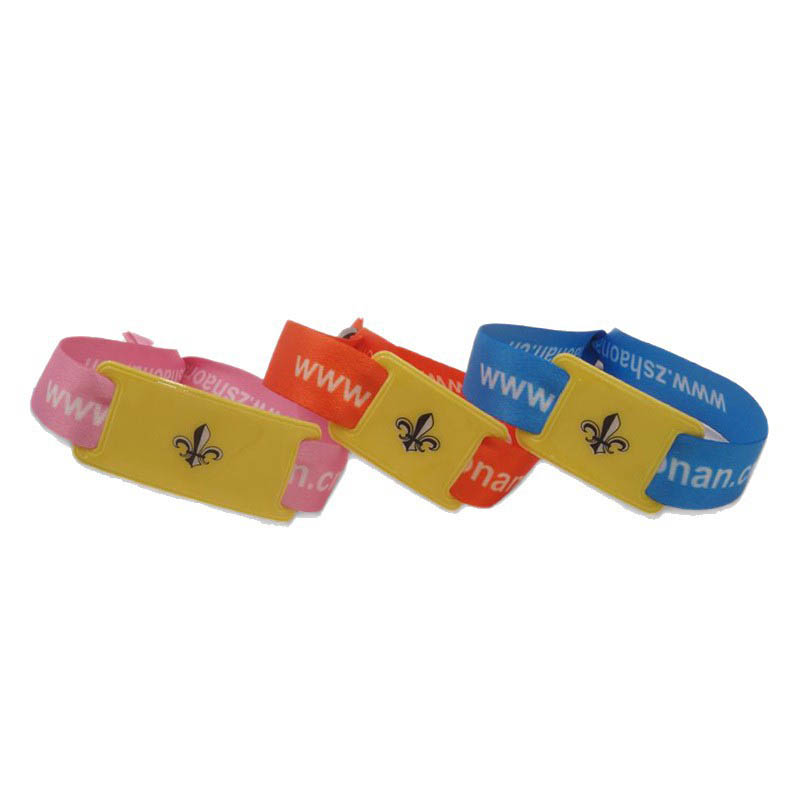
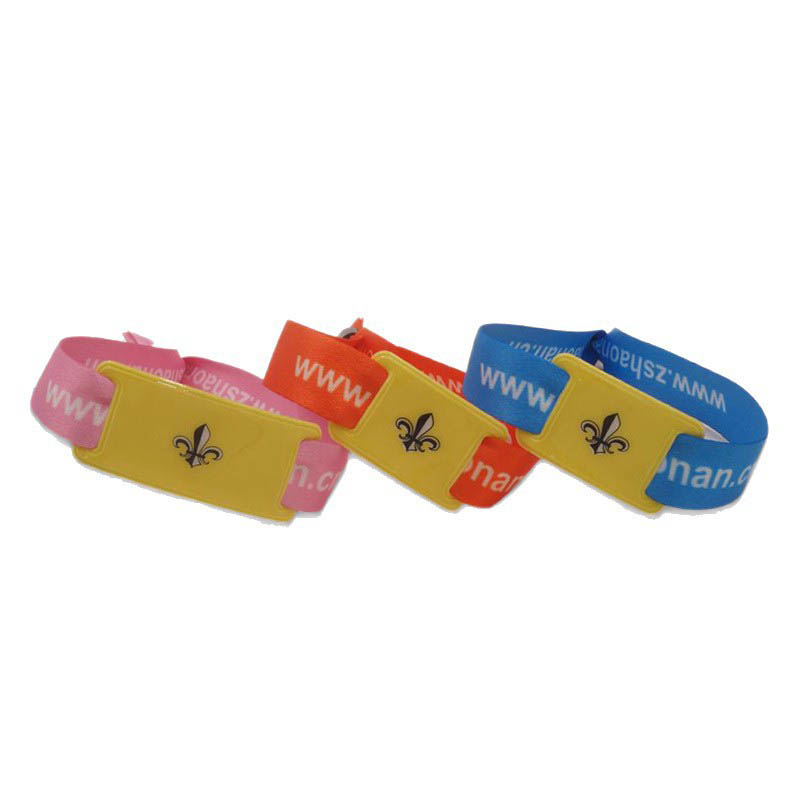
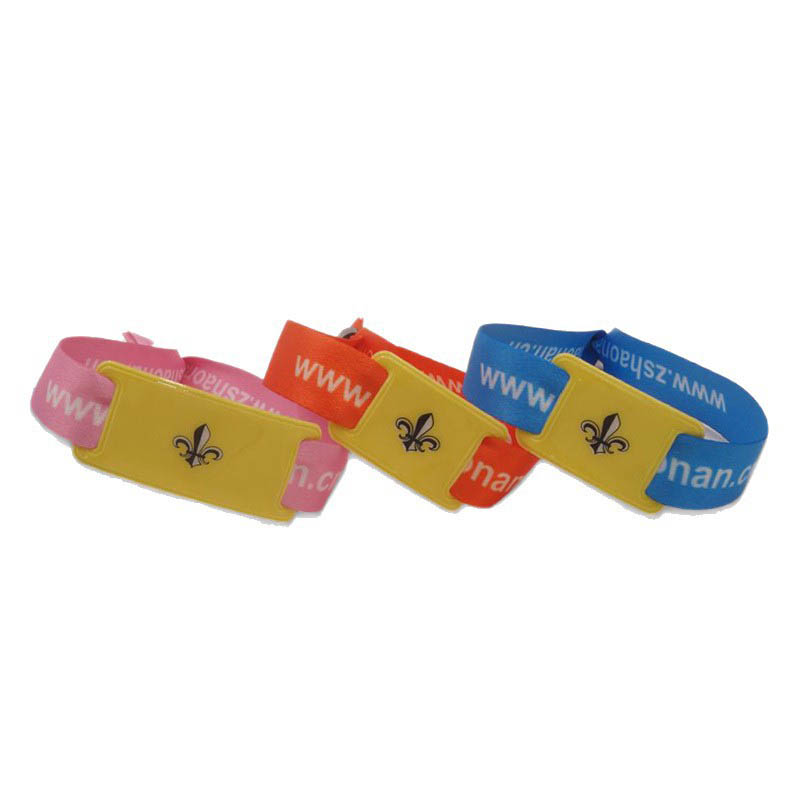
It is worth noting that the card is not isolated but securely bonded to the nylon wristband via a one-time locking or heat-riveting process. This integrated design reduces the card's exposure to stress alone—for example, when a viewer raises their hand, the stress is primarily borne by the high-strength nylon band, while the PVC card remains relatively stationary as the information carrier, significantly reducing the frequency of bending and scratching. Furthermore, rounded edges prevent cracking due to stress concentration at sharp corners.
In conclusion, supported by materials science and printing engineering, the disposable PVC small card possesses durability far exceeding what its name suggests. Even under harsh conditions of sweat, rain, and high-frequency friction, it maintains structural integrity and clear information, truly achieving "one-time wear, reliable throughout." For organizers, this is not only a balance between cost and efficiency, but also a silent commitment to event safety and brand experience.
1. PVC Substrate: Ensuring Toughness in Thinness
Disposable PVC small cards typically use 0.3–0.5mm thick flexible PVC sheets. This material itself possesses good flexibility and tear resistance. Compared to paper or ordinary plastics, PVC is less prone to deformation, wrinkling, or softening due to water absorption. Even after prolonged contact with sweat or rain, its physical structure remains stable and will not quickly curl or disintegrate like paper cards. More importantly, high-quality PVC raw materials undergo optimized plasticizer formulation to ensure softness and comfort while preventing cracking during bending or stretching due to excessive brittleness.
2. Surface Coating and Printing Process: Key Barriers Against Wear and Fading
Blurred information often stems from ink rubbing or coating wear. To address this, high-performance disposable PVC cards typically employ double-sided matte or glossy protective films and use solvent-resistant, hydrolysis-resistant resin-based inks or heat transfer technology during the printing process. Some high-end products also undergo UV curing, creating a cross-linked structure between the ink and the surface, significantly improving wear resistance. Real-world testing shows that cards treated with this process can withstand hundreds of simulated abrasion tests, with QR codes, text, and colored patterns remaining clearly legible, effectively resisting salt from sweat, rain, and friction from clothing.
3. Environmental Adaptability: Comprehensive Considerations from High Temperature and Humidity to Chemical Contact
Large events often involve high temperatures, high humidity, and even contact with chemicals such as sunscreen and alcohol spray. High-quality disposable PVC cards undergo accelerated aging testing during the production stage, ensuring no significant fading, sticking, or odor release after 24 hours of continuous exposure in an environment above 40°C and 90% relative humidity. Simultaneously, PVC itself is naturally inert to weak acids and alkalis, preventing chemical degradation and ensuring the long-term stability of the information layer.
4. Structural Integration: Synergistic Enhancement of Overall Durability with Nylon Wristband
It is worth noting that the card is not isolated but securely bonded to the nylon wristband via a one-time locking or heat-riveting process. This integrated design reduces the card's exposure to stress alone—for example, when a viewer raises their hand, the stress is primarily borne by the high-strength nylon band, while the PVC card remains relatively stationary as the information carrier, significantly reducing the frequency of bending and scratching. Furthermore, rounded edges prevent cracking due to stress concentration at sharp corners.
In conclusion, supported by materials science and printing engineering, the disposable PVC small card possesses durability far exceeding what its name suggests. Even under harsh conditions of sweat, rain, and high-frequency friction, it maintains structural integrity and clear information, truly achieving "one-time wear, reliable throughout." For organizers, this is not only a balance between cost and efficiency, but also a silent commitment to event safety and brand experience.